Tag: sherlock-holmes

  • Batman: The Shadowed Beacon of Hope

    Batman: The Shadowed Beacon of Hope

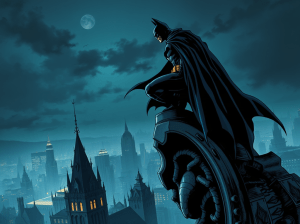
    Contrary to popular belief, Batman is a symbol of hope just like Superman. Without this understanding, one has failed to understand the Dark Knight. Batman shines hope not only on the people of Gotham but also on his villains, peers and readers alike.

    Dressed in dark colours and perched on gargoyles (Gotham really does have too many of those), Batman is a stark contrast to what we usually imagine hope to be. He is not bright or flamboyant but instead is bruised, beaten and even seems sinister. Yet, he embodies a hope that lurks in the shadows, a constant presence even when the sun goes down.

    My love for ‘The Bat’ stemmed from watching the Justice League and Batman shows as a child. It slowly grew on to me when I started reading the comics and learnt more about the affectionately termed ‘Bat Family’. I found it fascinating to see the hero that many assume works alone, have a vast network of misfits trailing behind him. Each with a contrasting personality but still united for a single purpose.


    Bruce Wayne The Boy

    To understand Batman, we must first understand the boy behind the mask. Bruce Wayne was once just a child, devastated by the tragic loss of his parents in a dark alley (infamously dubbed as Crime Alley). This traumatic event doesn’t just define his past; it shapes his very purpose. Ironically, Bruce is his own greatest foil. He sacrifices the chance at a normal, happy life in exchange for a never-ending mission to ensure that no other child suffers the same fate he did.

    Gotham itself is a reflection of Bruce’s inner turmoil. The city is as broken, chaotic, and corrupt as the boy who lost everything. Its streets, plagued by crime, greed, and violence, mirror Bruce’s own darkness, a darkness born of grief and a longing for justice.

    Gotham is a reflection of the personal devastation that fuels Batman’s every action, a city on the brink of collapse, just like Bruce’s fractured soul. But, in fighting for Gotham, Bruce is also fighting for himself. He’s reclaiming control over a past that took everything from him, much like he’s attempting to reclaim agency in a world that seems uncontrollable.

    We see this in his symbol, The Bat-Signal, shining in the Gotham night sky, a symbol that embodies both fear and hope. For the citizens of Gotham, it represents a glimmer of hope in an otherwise dark world, a signal that someone is watching over them, fighting to restore order.

    For Gotham’s criminals, it evokes fear, signaling that their actions will not go unpunished. This duality mirrors Bruce’s own existence: the trauma of his childhood both fuels his resilience and defines the very symbol of Batman. Bruce doesn’t run from his pain; he channels it, using it as the driving force behind his quest for justice. In doing so, he reclaims not just Gotham, but his own sense of purpose and control.

    Yet his mission isn’t without its personal cost. Every step Bruce takes towards his purpose is met with a new challenge. Whether it’s the villains he faces or the children he tries to protect, Batman is constantly walking a tightrope. His “No Kill Rule” is tested time and again most poignantly during the death of Jason Todd. Death in the Family was particularly tough to read, because Jason’s death wasn’t just a loss it nearly broke Bruce, pushing him to the edge of crossing that line he swore never to cross: killing the Joker.

    This event left a deep scar on Bruce. His guilt and sense of failure made him hesitant to take on another Robin Tim Drake (who many consider the one who perfected the mantle). After Jason, Bruce became more isolated, more obsessed with his mission, and more burdened by the weight of his choices. It’s in these moments that Bruce’s true resilience shines: he never takes for granted that anyone, even those closest to him, won’t be pushed to the brink. He treads the line between hope and despair daily. In the darkest of times, he chooses to stay true to his purpose.

    (I bet if we took an Adversity Quotient (AQ) for Bruce Wayne ,it would be higher than anything we could ever imagine.)

    ”People need dramatic examples to shake them out of apathy, and I can’t do that as Bruce Wayne. As a man, I’m flesh and blood. I can be ignored. I can be destroyed. But as a symbol, as a symbol I can be incorruptible, I can be everlasting.”- Christopher Nolan


    The Hero We Deserve

    Batman is a friend in today’s age; his relatability is in showcasing how a tragedy spends its time shaping us. Many people are shaped by good and bad things that happened to them. It impacts their politics, speech, dressing, thoughts and even their interests.

    I find it poignant that his villains were also shaped by things that happened to them; Penguin, Harvey Dent, the infamous Joker each of them mirrors Bruce in some way, embodying the path of despair and hopelessness that Bruce has always fought to avoid. Batman stands as a constant reminder that one bad day doesn’t have to define your future. He doesn’t just fight to stop them; he fights to show them that redemption is still possible. He sees in them what they can’t see in themselves: the possibility of hope.

    To quote Kingdom Come page 151, panel 2 “More than anyone in the world, when you scratch everything else away from Batman, you’re left with someone who doesn’t want to see anybody die.” Batman’s journey isn’t just about defeating villains, it’s about showing us that, no matter the pain or loss we face, we have the power to choose hope.


    Till we meet again

    No matter the version, whether the detective of the comics, the dark knight of the movies, or the animated hero from the cartoons, each Batman carries the same essential truth: even when all seems lost, it is not. He stands as a symbol of resilience, a reminder that hope can survive even the darkest nights.

    Each new incarnation is a passing of the torch, a fresh reminder that the fight goes on, and so does the hope.

    Till we meet again, in shadows and stories yet to come.

  • The Weight of Years: Clouded eyes, Greying skies

    The Weight of Years: Clouded eyes, Greying skies

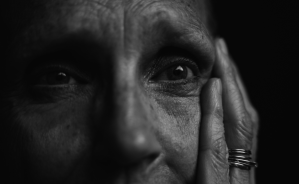
    It is often said that the windows are the eyes to a person’s soul. What happens when those eyes are clouded with cataract and blindness? Does the person lose their soul and dignity?

    I want to reflect on the importance of treating and respecting our elders in society. In the past, there was an over emphasis of elders and now in the present, the opposite has occurred. Their thoughts are seen as ‘outdated’, ‘traditional’, ‘archaic’; words that deem them as a fossil of our time, to be buried underneath once they are gone.

    But even fossils are displayed in museums aren’t they? There they provide us an opportunity to study them and learn more about what the past was like and how these relics lived through them.


    Growing Concern

    Older adults are interesting because while there is a global growth of the aging population projecting to hit over 1.4 billion people by 2030, they are plagued with mental, physical and emotional ailments that the vigor of youth can no longer hide.

    This makes them vulnerable the same way children are. However, while children have the veil of innocence around them and have not developed tough skin or keen eyes, our elders have gone past these stages to a point where their skin begins to thin and stretch. Masking pain becomes frustrating when their whole life is seemingly coming to a halting stop before they have even accomplished their dreams and wishes.

    Yet they are seen as burdens to be chucked away at a nursing home. They are told that they should plan for their own future since it’s no one’s duty to care for them. In fact, as life would place it, it would be their responsibility to care for not just themselves but their children and grandchildren throughout their entire life. Can you imagine their thoughts where they know that once their eyes are permanently shut, their ears would hear fights on estate, properties and money.

    In fact, it almost seems kinder for them to pass on younger when their skin is still tough and when they can earn their keep. At least they might be missed, if not for anything but for being a productive member of society.

    Instead, many are forced to endure emotional, physical and financial abuse at the hands of families and strangers. There has been a growing prevalence of elder abuse in society with the WHO, reporting an estimate of 1 in 6 people (15.7%) aged 60 and above being subjected to some form of abuse. As a community, we have forgotten the reverence of elders and their roles in our lives.


    Media and Culture

     In the media we consume, there is always a wise man or woman guiding the protagonist. For instance, in the Disney movie Brother Bear, the shaman woman is the key not just for the protagonist but for the reconciliation and growth of the deuteragonist.

    In Lord of The Rings, Gandalf is played by Ian Mckellen, who is a necessary motivation to ensure middle earth is not lost. Many myths and even religious texts follow such principles, which display the vitality elders in society.

    This prompts the thought of why we struggle to translate this to life.

    Gray hair is a crown of glory; it is gained in a righteous life.” (Proverbs 16:31)


    Hard Truths

    The truth is, many times our loved ones are flawed beings that have in some way or form hurt and shattered us. In fact, some older adults still act in selfish and immature ways. How then can someone mask behind the age they hold to have supremacy over others and shrink away from accountability for their actions.

    These are not the ones I am speaking of; in fact, I would implore anyone reading this to help them become better people so that their last days will not be filled with pain and hurt.

    Nevertheless, the world is not black and white and it’s something that I have struggled to accept. I know right from wrong (but my goodness are people complex and terrifying!).


    In The End

    The same can be said about all of us, we have been victims and perpetrators in others’ story. The difference will take place if we are willing to be better. We may be unable to control the other person or the fact that we will continue to be hurt. But at least we can try to restore what we can control and leave the rest to God.

    But one thing is true, there will be a time where we will become old and we will be the ones with archaic ideas, the ones who are senile, the ones who walk too slow and the circle of life will continue its rounds.

    Would we want to be treated in the same way?