
Tag: movies

  • Inbetweeners: The Unremarkable Ones

    Inbetweeners: The Unremarkable Ones

    I recently had the privilege of sitting in on a research methods class, and something the instructor said stuck with me: who tells the story of the inbetweeners, and can we ever tease these stories out?

    As someone who tends to focus on general population results or even looking at things from a statistical standpoint in academics, this brought me to a standstill mentally and challenged some of the ways I view things. I realised that many times, inbetweeners are left out because they usually aren’t statistically significant, or not even an outlier that would seem relevant to study or look through.

    They just don’t matter.

    When I realised what it meant to be an inbetweener, I recognized that many of us in our daily lives are exactly that. Our stories are converged or diverged based on the decisions we make; we don’t stand out in a crowd unless someone teases out our story or aims to find out more about us. General claims can be made about our upbringing and decisions, like a comment on the weather. Still for us it’s not just that, for us, it’s our lives and our stories, things deeply personal to us.

    In a world where generalisations are easier to digest and algorithms glorify being shocking, do people have the time or desire to sit and tease out stories of the unremarkable ones?

    All these thoughts brought me back to my tertiary days, when I had to conduct interviews with ordinary people. I remember sitting with an elderly man, talking about what it means to age, and hearing about how he runs marathons, his dreams and aspirations, not just for his son but also for himself, to achieve something; his stories, his values, his passions. Nothing about him would have shown up in a dataset, no headline, no statistic, nothing that would have flagged him as significant.

    And yet sitting across from him, none of that mattered; what mattered was that, for that hour, his story was the only one that existed. A hot day in Singapore never felt so refreshing

    After that conversation, I looked around at the people around me and realised: how many stories are there untold? If only I could sit with everyone just once, to talk and learn something they know, maybe generalisations wouldn’t be the be-all-end-all of life. It’s a strange thought that the same small, unremarkable moment that meant nothing to anyone watching from the outside could mean everything to the person living it.

    Much like how we can never see how quick a humming bird flaps its wings unless we take the time to slow down and capture it.

    If a single unnoticed conversation could shift the way I saw people, I began to wonder what happens when it isn’t one person, but thousands, whose stories go untold at once.

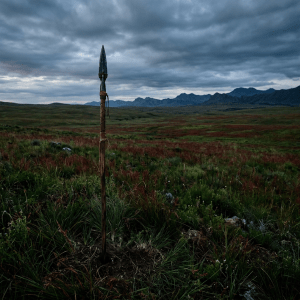
    The Nepal flood stories brought this out. A country that many people would consider insignificant in terms of politics, a landlocked nation, was demolished by floods. Yet through this ordeal we learnt more about what Nepal is, the beauty of its people, the significance of its mountains, and the symbolism it holds.

    The stories of the ordinary people lost hits hard, yet every person in the country pushing for resilience gives hope. Young or old, animal or structure when found intact, brings to the forefront a sense of ease of knowing we never lost them.

    It is something inherently human. We may not know much about them, in fact they may seem unremarkable on any other day, yet we know they matter and don’t exist in obscurity. Maybe because deep inside we know that is us.

    I doubt academia will ever be able to tease out all the inbetweeners, but if we can do it ourselves by sharing a cup of coffee, having a conversation with someone we want to get to know more, we can help people be heard.

    To be loved but not known is comforting but superficial. To be known and not loved is our greatest fear. But to be fully known and truly loved is, well, a lot like being loved by God. It is what we need more than anything. It liberates us from pretense, humbles us out of our self-righteousness, and fortifies us for any difficulty life can throw at us.

    – Timothy Keller
  • The Battleground of the Mind

    The Battleground of the Mind

    The musical Hadestown has a line spoken by Hermes in the reprise of the song Wait For Me:

    [HERMES, spoken]
    Meanest dog you’ll ever meet –
    It ain’t the hound dog in the street.
    He bares his teeth and tears your skin
    But brother, that’s the worst of him.
    The dog you really got to dread
    Is the one that howls inside your head.
    It’s him whose howling drives men mad
    And a mind to its undoing.

    It always struck a note with me, and as I grow older, it becomes clearer. I never once thought my mind would become the place of my greatest weakness. It is too precise. It analyses, compares and creates patterns for me. It has always been a reliable source of filtering and objective thought. Although the occasional bias may enter, it never stays long because curiosity always helps me flesh things out.

    But the same mind that helps me navigate the world also convinces me not to enter it.

    Replaying embarrassing scenarios in my head right before bed. Overthinking every small interaction or action long after it’s been done.

    Funnily enough, my mind can sometimes stagnate me from experiences. And I’m not talking about breaking one’s own values or morals, but something as simple as picking up a new hobby, learning a new skill, or asking a question. Concerns of whether I’m too old, whether I should know better, or what people would think. And as someone who has quite a nonchalant attitude towards other people’s perceptions of me, my mind becoming a stumbling block in this area.

    But life is lived through trial and error, getting back up, and continuing to move forward. That’s when things begin to click or, at least, put you on the right path.

    I realise a lot of things in life can’t be explained. Energy, consciousness, happiness, and joy—for some of these things we don’t even fully grasp the mechanisms behind them, let alone explain what they are.

    Yet I hope that overanalysing every piece of my life, somehow will make life act sensibly.

    Ripping off the bandage here; I have missed a lot of chances, even at a young age, because I conceded to the fear in my mind rather than the possibilities in the world. I wonder what would have become of me had I stopped looking at fear as a guiding principle for how to live.

    Whether through the experiences of others or my own, things rarely play out the same way twice. If the old me saw me now, I doubt she would recognise me despite my reservations in taking chances.

    And it’s funny because every impactful experience I have gained in my life was because I did something I never would have dared to do. Yet my mind still plays the same trick on me that maybe it’s better to be safe and secure.

    The cliché line of “leaving your comfort zone” never did me any favours, even when uttered by loved ones. There is a reason one stays there; it’s comforting.

    But now I think of comfort zones as bedrooms. In life, we all have those rooms to rest and recharge. But just as a bedroom is connected to a living room, a kitchen, and other rooms, I started looking at life the same way. An ecosystem where we extend our comfort zones, not by immediately leaving the room and walking into a jungle, but by exploring the simple things around us: trying a new fashion style, changing up a workout routine, volunteering with animals, or complimenting a stranger.

    Now that I have started clearing the debris from the lenses of my brain, I can say:

    A clear mind is discerning. One that understands that living deeply means accepting that unpredictability and risk are inseparable from life itself.

  • Gold in the Cracks: Rewriting Honour in Zuko’s Journey

    Gold in the Cracks: Rewriting Honour in Zuko’s Journey

    Now that the Avatar: The Last Airbender franchise may hopefully be returning to the big screen, it feels like a good time to revisit why a show that aired nearly two decades ago continues to resonate so strongly with its viewers. Created by Michael Dante DiMartino and Bryan Konietzko, the series is often praised for its worldbuilding, but what has truly allowed it to age so well is its character writing.

    While Avatar does draw from familiar archetypes it consistently subverts them. These are not static tropes, but evolving identities.

    To me, Zuko’s character arc stands out as one of the most compelling explorations of identity.

    His arc mirrors the Japanese art of kintsugi: the practice of repairing broken pottery with gold, not to hide its damage, but to make it part of the object’s history. Zuko’s journey is not one of simple redemption, but of reconstruction. He does not return to who he was before he broke; instead, he becomes someone new by confronting the very fractures that once defined him.

    The First Fracture

    Zuko’s story begins at the moment of fracture. Branded a failure by his father, Fire Lord Ozai, he is burned and exiled after speaking out of turn during an Agni Kai. The scar he carries is not just physical, it is the visible line where his identity splits. Before this moment, he is a prince shaped by expectation; after it, he becomes something unfinished, defined by absence, rejection, and the need to be restored.

    This moment defines his entire worldview.

    Like shattered pottery, Zuko tries to gather his pieces in the only way he understands: by pursuing the Avatar. His pursuit of the Avatar is not initially about justice or balance. It is about restoration. He believes capturing Aang will restore his honour and, more importantly, earn him his father’s approval.

    But this “honour” is never truly his. It is conditional, externally defined, and rooted in violence. From the beginning, Zuko is chasing something denied to him not because he lacks worth, but because he refused blind obedience, something Ozai demanded of him.

    This is the illusion at the heart of Zuko’s early arc: he is not trying to become whole, but to become acceptable.

    Learning How to Be Whole

    Unlike Ozai, who defines worth through obedience and power, Iroh offers something Zuko does not yet understand care without condition. Once a celebrated general, Iroh carries fractures of his own, shaped by war and personal loss. Yet rather than allowing those breaks to harden into cruelty, he has already begun to remake himself. In this sense, Iroh is not simply a guide…He is an example of what it means to live as something that has been repaired.

    Importantly, Iroh never forces Zuko back into shape. Where Ozai burns and demands, Iroh waits and listens. He does not strip Zuko of his anger or confusion, but makes space for it, offering quiet alternatives: reflection instead of reaction, tea instead of control, patience instead of force. His guidance is subtle, but deliberate. He teaches Zuko that restoration cannot be imposed from the outside; it must be chosen.

    This is what makes their relationship so critical to Zuko’s reconstruction. Iroh does not “fix” him. Instead, he creates the conditions in which Zuko can begin to see that he is not beyond repair and more importantly, that he does not need to return to who he was before in order to become whole.

    In contrast to Ozai’s conditional approval, Iroh’s presence introduces a different possibility: that the cracks do not need to be hidden or erased but understood. That they can, in time, become part of something stronger.

    When the Cracks Reopen

    Zuko’s decision in Ba Sing Se reveals how fragile that process truly is and how incomplete his understanding of honour remains.

    After traveling with Iroh and witnessing the consequences of the Fire Nation’s actions, Zuko comes closer than ever to redefining himself. For a brief moment, it seems as though the broken pieces are beginning to hold that he might act in alignment with what he has begun to recognise as right, rather than what he has been taught to pursue.

    And yet, when faced with the opportunity to regain his honour, Zuko turns back.

    His choice to side with Azula and betray Iroh is not simply a relapse, but a misalignment. He abandons the internal understanding he has begun to form, in favour of the external validation he has always chased. In doing so, he returns to a version of honour defined not by integrity, but by approval by his father, his nation, and the system that first broke him.

    This is what makes the moment so critical. Zuko is no longer ignorant of the difference between the two definitions of honour. He has seen it, questioned it, even begun to live by it. But when forced to choose, he cannot yet sustain that alignment.

    Like a piece repaired through kintsugi, the cracks do not disappear simply because they have been mended once. Under pressure, they can reopen. Zuko’s relapse does not erase his growth; it exposes its limits. His desire for acceptance still outweighs his commitment to what he knows, however faintly, to be right.

    When he later finds that regaining his “honour” brings him no sense of wholeness, the contradiction becomes impossible to ignore. What he has achieved is recognition without alignment…and it feels empty.

    This realization marks a turning point: for the first time, Zuko is forced to confront that honour cannot be given to him. It must come from acting in accordance with what he believes, even if it costs him everything.

    Gold in the Cracks

    Zuko’s decision to join Aang marks the first moment in which his actions fully align with what he believes to be right.

    Unlike his earlier attempts at change, this choice is not driven by impulse, anger, or the desire for approval. It is deliberate and difficult. By turning against the Fire Nation, Zuko knowingly gives up the very thing he once believed would make him whole: his father’s acceptance. In doing so, he finally rejects honour as something granted to him and redefines it as something he must live out.

    Becoming Whole

    Like kintsugi, the repair is not about returning to an original state, but about creating something new from what has been broken. Zuko does not discard his past: His anger, his mistakes, his longing for belonging but neither does he allow them to dictate his future. Instead, he integrates them, allowing those fractures to inform his choices rather than control them.

    His later role as Fire Lord reflects this transformation. Where Ozai ruled through domination and unquestioned authority, Zuko leads with reflection and restraint. Power, for him, is no longer something to obey or wield without question, but something to examine and use responsibly. In this way, he does not simply inherit his nation’s legacy he reshapes it.

    Importantly, Zuko’s growth is not defined by perfection, but by consistency. He does not become “good” by erasing who he was, but by aligning his actions with what he now understands to be right, even when it is uncomfortable or costly. This alignment is what gives his transformation weight. It is what makes it lasting.

    The gold in kintsugi does not hide the cracks it makes them visible. In the same way, Zuko’s past remains a part of him. But it no longer represents something to overcome or deny. Instead, it becomes the very foundation of the person he chooses to be.

    In redefining honour, Zuko ultimately redefines himself and in doing so, he breaks not only from his father’s expectations, but from the cycle that shaped them. Choosing, at last, to build something better from what once broke him.