I think we all heard the news of the assassination of Charlie Kirk.
As a young political science student, when my professors asked me to write papers, I tried to push myself across the spectrum from the left to the right. Political commentators became my study material. They helped me understand the lenses people use to interpret policies, politics, and even law.
Listening to commentators like Kirk offered me a window into what shaped people’s convictions. It’s still too early to say what the motive behind the shooting was. But one thing is certain: deciding someone is not worthy of life because you disagree with their views is abhorrent. It betrays not only the inability to deal with adversity but also a dangerously childish worldview. A worldview that assumes life should never offend you.
When I first heard the news, shock gave way to something bizarre: fear. Why was I afraid? I wasn’t there. I wasn’t involved. And yet, the thought that someone who made a career out of speaking sometimes on college campuses (which are supposed to be safe), sometimes in hostile environments could be killed for it made me uneasy. The idea that words alone could be a death sentence is unnerving.
This is not just about one man, or one incident. It’s about how fear is used as a weapon.
In George Orwell’s 1984, fear is the very foundation of totalitarian control. The Party doesn’t just punish dissent, it conditions people to fear even the thought of dissent. The Thought Police make sure that rebellion dies not in action, but in imagination.
A “thoughtcrime” isn’t about what you do, but what you dare to think. It may sound extreme. But think about it: when violence is used against speech, the message is the same, don’t even think about saying something that could offend the wrong person. Fear seeps in. Self-censorship follows behind. Debate shrinks. And what remains is not freedom, but silence.
That’s why what happened horrifies me. Because it wasn’t just an attack on an individual; it was an assault on the very idea of dialogue itself. When disagreement turns violent, the pursuit for truth collapses, because fear takes its place. Regardless of whether or not we agreed with Kirk’s politics, we should all be asking ourselves: what kind of society are we creating if the price of disagreement is death?
Fear may control the masses, but only if we let it. The harder path, or what I like to call the braver path is to deny fear’s control on dictating which conversations we can have, which people we can listen to, or which ideas are allowed to exist.
In today’s world a moment of silence is hard to come by. Be it background noise of the TV or constant notifications from friends or family [on our devices]. Silence has become a foreign concept to us. Even our vocabulary has changed around the concept of silence, terms like Fear of Missing Out (FOMO) and hustling are indication that we need to always be on the move or involved in something. If we are not, something is wrong.
It is important to take note that silence is not merely the absence of noise, it’s also the control and silencing of your own inner voice and thoughts. Imagine tethering a kite to a tree and letting it blow in the wind. When I think of silence I think of that scene, there is still movement, there is still colour there is still life, but it is grounded in something firm and unshakable.
It is where we reflect on our lives, thoughts, plans and emotions. It is also sometimes what we need to make the right choices.
As someone who spends a lot of time in silence, for better or worse, I don’t fear it, but I treat it like a mentor that guides me. And it seems that many philosophers in the past have had similar thoughts:
Friedrich Nietzsche, wrote,
‘The noble man honours in himself the powerful one, him also who has power over himself, who knows how to speak and how to keep silence, who takes pleasure in subjecting himself to severity and hardness, and has reverence for all that is severe and hard’.
Nietzsche implies that true power comes from self-mastery over one’s words and thoughts. It is a space for one to practice their own strength. For Nietzsche, silence represents a break from the dictatorship of language, an opportunity for one to learn when to speak and when to remain silent. To study the world without placing oneself as distraction.
Similarly, the philosopher Simone Weil wrote
‘Our soul makes constant noise, but it has a silent place we never hear’.
For Weil, in the search for the divine the only place we can find it is in our silence. It is the only time God will not be interrupted in speaking with us because our distractions are put at bay.
Many times, when we cry silent tears, it holds more emotions and truth then whatever words we can muster up to speak. The purity of silence is that it allows for a free expression that would only ever be limited by words.
Silence is not Weakness
One of the most intriguing aspects of silence is how often it is categorised as weakness. If someone does not retort back to defend themselves or to engage in conversations that are untrue, they are seen as being complicit. But they are far from it, they are disengaging from the noise in the world. Sometimes in being well-meaning to find answers, I wonder if we are just giving people the opportunity to justify their actions with inadequate words and resounding noise, that it deafens our moral compass.
The idea that actions speak louder than words is a phrase we use often but hardly practice.
Zeno of Citium, shares how silence is a way to prevent yourself from becoming a fool. He writes that
‘It is better to trip with the feet than the tongue’.
His understanding in how many of the world’s fights, wars are aggravated by the tongue, a splash of anger, words and actions that do not think or consider its repercussions.
Similarly, Jean Paul Sarte recognises that silence has power:
‘Every word has consequences. Every silence, too.’
Silence acts as a signal to others on your stance and position.
From the perspective of free speech, people should be allowed to say whatever they want, and while free speech is a way one can freely express themselves remaining silent is another less taken path that people can also choose to express themselves freely.
While it may not be as flashy as speaking your mind, it does hold more wisdom.
In choosing silence, people can reject overwhelming expectations placed on them by society, or their peers. Silence becomes a deliberate refusal to conform to a world that expects constant output and response.
Silence as a path to Self
The idea of silence as an introspective practice is not new. Many Eastern philosophies, especially those found in Buddhism and Hinduism, place great emphasis on the power of silence for self-realization. The practice of meditation has been seen to embrace silence and cultivate inner awareness to achieve enlightenment.
In the words of Rabbi Akavia
Silence is a fence around wisdom.
It often suggests that silence is a protective barrier, preserving wisdom by controlling impulsive speech and allowing time for deeper thought and learning.
In the end silence helps prevent mistakes, protects the purity and authenticity of wisdom, and allows for the observation and understanding of others. It fosters one’s own growth and thoughtful decision-making.
A Moment of Silence
There is a reason when someone passes we are asked to remain silent. Silence brings out the introspective quality of life that we are missing today. I hope after reading this, you will learn to embrace a moment of silence, be it in grabbing a drink alone or sitting at the park bench admiring the sky.
Find the time to be silent.
As the poet T.S. Eliot wisely noted, “The greatest proof of silence is the ability to hear it.” In silence, we can find the answers, in what is left unsaid.
Polarization is a topic that feels heavier with every election cycle. The language is sharper, the stakes feel higher, and the space for nuances seems to shrink with each passing day. We don’t just disagree anymore, we disconnect. But if we’ve lost the ability to talk to those who think differently, what else are we losing along the way?
The Growing Divide
Different circles bring different conversations, and I’m blessed to be a part of many of them. But that has also led to me standing in the gap, trying not to demonize one side or the other just to bring clarity where I can. In today’s world, meaningful conversations are in short supply. Maybe it’s because we’ve become too comfortable speaking behind screens, or maybe it’s because we’ve started to view anyone who doesn’t agree with us as the enemy.
Dialogue in a Time of Division
Today having a conversation is hard because it may challenge our preconceived ideas and beliefs. Personally, I hold onto my convictions tightly, not because they are beyond questioning, but because I’ve had the chance to deconstruct and reconstruct them over time, in fact I welcome conversations that challenge me. In doing so, I not only understand people with different worldviews or political leanings better, but I also appreciate my own values for what they are. There’s a certain friction that comes with real dialogue without it, collisions are bound to happen. That’s why it’s so important to choose to be a different voice, but also to know how to speak about it with care.
In my view, people feel as though their beliefs and their rights are being disrespected, but the real issue is that no one knows where to start. Conversations often devolve into shouting matches, with no one sitting down to see the other person as an individual. We’ve started wearing our ideologies like armour, as if they define our entire selves.
The political arena has always been a battleground, but with the rise of polarization, it seems that even the everyday person has been pulled into the fight. Now, before even beginning a sentence, a disclaimer is required even if there’s nothing controversial about what’s being said.
I can’t help but wonder if this is why conversations about war, race, and poverty have become so difficult. People are coming from a place of attack, rather than a place of listening and data backs it up. Allianz’s 2024 Social Resilience Index found rising unrest globally, even as economies recovered. Protest surged in the Middle East (+40%) and Africa (+19%), while the US, Canada, and parts of Europe also saw increases tied to political divisions, migration, and economic pressure.
Allianz identified that both wealthy democracies like the US and France to more fragmented or severely strained nations like India and Nigeria were hit with the same issue. Additionally, with over 70 countries holding elections in 2024, the report notes a clear global shift: incumbents are losing ground, and polarization is deepening, especially in the West.
Worse still, this divide can come at an economic cost. Consumer confidence dips tied to political division could cost countries like the US over $200 billion in spending over four years. Allianz concluded that resilience isn’t just about policy it’s about trust, transparency, and communication. Without those, even the most stable societies can fracture.
But despite the noise, I’m heartened by the efforts of organizations that are stepping in to fill the gap. Still, I wonder whether the voices chosen to represent “the people” reflect real, raw realities or simply model behaviour that fits a polished narrative.
Listening: Act of Radical Kindness
One group that fascinates me is the “silent majority” the political observers who stay out of public debate but hold deep, thoughtful insights. In private circles, their ideas challenge conventional thinking and elevate conversations. These individuals don’t shout. They share quietly, intentionally and with great care.
Maybe that’s where we can all start in smaller spaces ; with our closest loved ones. If we can practice honest, respectful dialogue in those places, maybe it becomes easier to expand that grace outward. Maybe then we can begin not only to understand one another, but also to respect our differences because that’s where real tolerance starts, and it’s something we’re in desperate need of today.
Let’s be honest, if Taylor Swift posts a voting link on her Instagram story and 23,000 people register to vote the same day, that’s not just influence. That is authority.
These days, celebrities are not just making cameos in our playlists or movie nights; they have started showing up in our politics. Once upon a time, the people shaping public discourse were politicians, economists, and social scientists. Now? It’s musicians, actors, influencers. And they’re not just supporting causes, they’re shaping narratives, changing minds, and sometimes even laws.
But here’s the thing. Just because someone can influence doesn’t mean they always should.
When social media replaces the classroom
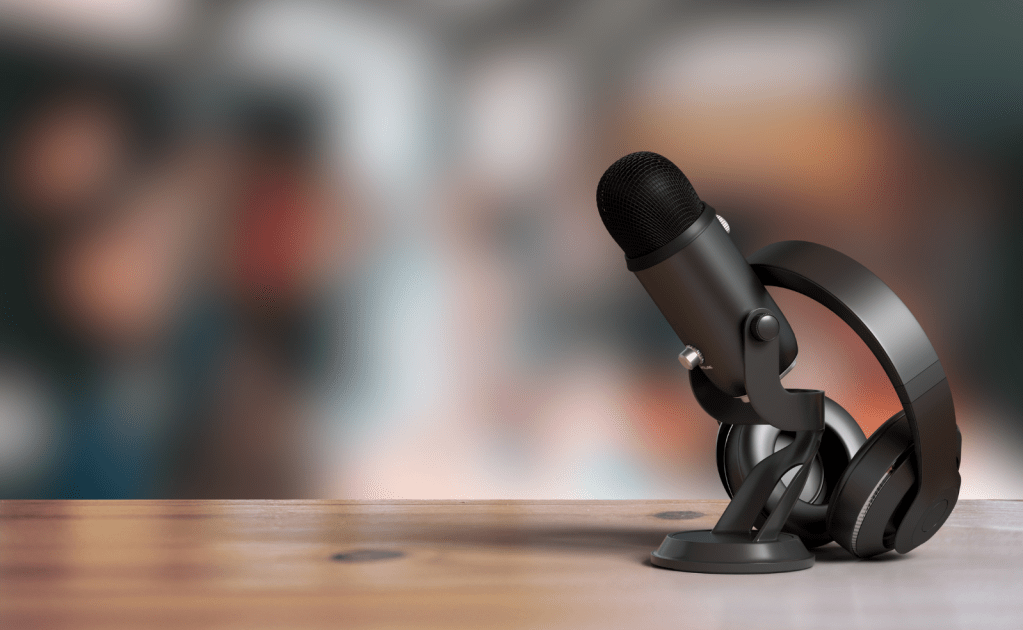
Social media made this shift prominent. In the past celebrities would share their political views or beliefs in interviews or during their shows. But now celebrities are given the stage, the microphone, and an always-listening crowd from their homes. In the past, if you wanted to understand policy, you would have read an article or watched a debate. Now? You might just scroll TikTok.
It’s not inherently bad. People are more engaged. But it raises questions.
If the first political opinion you hear comes from someone whose music or movie you’ve loved since high school, does that sway you more than facts? If they say “vote,” do you vote? Or more importantly, do you ask why?
This is not to shade on any celebrity using their platform. Honestly, some of them are trying to do good. However, as someone who has watched both politics and pop culture unfold, I’ve noticed something: we don’t always challenge celebrity opinions in the same way we challenge experts. There’s less pressure to provide evidence; its usually about the ‘vibes’.
The Halo Effect is real
There’s a psychological term for this: the Halo Effect. Basically, if we admire someone in one area, we assume they’re trustworthy in other areas as well. So if your favorite actor supports a policy, it suddenly feels… right. Convincing. Safe even.
Also it’s not new. The UN has used celebrity ambassadors for years to spread messages. But the difference? Back then, it was structured; experts in the background, message vetted, goal clear. Today? It’s a tweet. A story. A caption. No middleman, no filter.
And the scary part? Is that this makes it stick even more
But what about the experts?
Meanwhile, the experts, those with years of study, data, and lived experience, are getting drowned out. Remember during COVID-19 when there was a mix of information from health organizations, politicians, and celebrities? Expertise didn’t matter as much as optics.
Even within government systems, experts often hold less power than the politicians they serve. Imagine spending your life studying disease outbreaks, only to be overruled by someone more concerned about a headline than a health guideline.
Celebrities, though? They bypass that whole structure. Kim Kardashian advocated for prison reform, and Congress listened. Not because she’s an expert but because she’s her. That level of access, that kind of power, is not purely influence. It’s currency.
So what now?
I’m not saying we should cancel celebrity voices in politics. They often bring attention to overlooked issues, and that matters. But we have to ask: are we holding them to the same standards we demand from experts? Are we checking the sources? Or are we letting popularity set the bar for truth?
Because here’s the cost: when policy becomes a popularity contest, evidence takes a backseat. And that is dangerous.
But not all is lost.
There is a new kind of figure emerging, political commentators who blend expertise with accessibility. They understand the data but also know how to connect. They invite discussion. They challenge echo chambers and make space for complexity.
They are not perfect, but maybe they’re a step toward balance.
Final thoughts
We live in a world where a tweet can start a movement and a livestream can shift national conversation. That power is incredible. But it also comes with responsibility ours, not just theirs.
It’s easy to nod along with someone you admire, harder to stop and ask, “Do they really understand this issue?” And let’s be real: when you build your identity around a public figure, challenging them feels like challenging yourself.
Before we share, repost, or rally behind someone’s opinion, maybe we pause and ask: Is this just loud, or is it true?Do I admire them? or do I actually agree?




 ArrowsInk