Author: Shekinah

  • Poirot vs. Holmes: Contrasting Detectives

    Poirot vs. Holmes: Contrasting Detectives

    Hercule Poirot and Sherlock Holmes are two of the most iconic detectives in literary history. While Agatha Christie was undoubtedly influenced by Arthur Conan Doyle’s legendary sleuth, Poirot stands as a very different kind of investigator. This article explores how Poirot approaches his cases in contrast to Holmes, diving deep into their respective moral codes and legacy and how these differences have left a lasting impact on the genre of detective fiction.


    History of Detective Fiction

    Detective stories have long been ingrained in human storytelling, from ancient religious texts like the Book of Daniel, to the early Arabic Arabian Nights, and even countries having their own prominent detective-esque figures. However, no detective remains as iconic in popular culture as Sherlock Holmes, the archetype of the logical, methodical sleuth. Holmes’ place in history was cemented from his first appearance in A Study in Scarlet (1887) and remains unparalleled in influence.

    Yet, thirty-three years after Holmes’ debut, another detective emerged one who would challenge Holmes’ reign. Hercule Poirot, a Belgian-born former police officer, introduced an entirely different approach to crime-solving in Christie’s *The Mysterious Affair at Styles* (1920). Though Poirot and Holmes share similar intellectual gifts, their respective approaches to justice could not be more different.


    Holmes’ Influence: Poirot’s Roots in Detective Fiction

    Christie, like many authors of her time, was undeniably influenced by Holmes. After all, Sherlock Holmes set the bar for detective fiction. Both Holmes and Poirot are masters of deduction, yet their methodologies diverge in important ways. Holmes is the embodiment of the Victorian ideal: tall, lean, analytical, and detached from the emotional complexities of the people around him. Poirot, by contrast, is a short, pot-bellied man whose sharp mind and acute attention to detail are equally formidable. He may not physically intimidate like Holmes, but his intellectual prowess, especially in understanding the psychology of a crime, makes him unique.

    This physical difference symbolizes their contrasting approaches to detective work. Where Holmes relies on cold, almost mechanical logic, Poirot’s brilliance is psychological. Poirot’s “little grey cells” are a metaphor for his ability to decipher human behavior, motivations, and emotions, qualities Holmes often overlooks which is how he gets bested by Irene Adler. This shift from logic to psychological understanding in Poirot reflects the changing world of detective fiction, moving away from the strict rationality of the Victorian age to a more nuanced, introspective approach in the aftermath of World War I.

    Poirot’s own backstory as a refugee and his Catholic faith further emphasizes the moral complexity of his character. Christie made him more than just a detective; he is someone who grapples with questions of morality, justice, and human frailty, qualities that Holmes, whose emotions often remain enigmatic and distant, lacks. Whereas Holmes’ moral compass is mostly objective and rational, Poirot’s decisions are guided by his personal understanding of human suffering and frailty.


    Poirot’s Moral Code: Justice Beyond the Law

    Poirot’s sense of justice is not simply about solving a crime. It’s about seeking the truth while understanding the human nature behind the crime. His approach goes beyond legal frameworks and often delves into the psychological motives driving the crime. For Poirot, justice isn’t a rigid concept confined to the law, it is a balance of understanding the nuances of human behavior and choosing the right course of action, even if it means bending the law.

    One of the clearest examples of Poirot’s moral ambiguity comes in Murder on the Orient Express. In this case, Poirot makes the controversial decision to allow a group of murderers to go unpunished, understanding that their motives, an act of vengeance for a horrific crime (The crime was inspired by a real-life tragedy). This decision is based on compassion, something that Holmes’ without Watson would not have considered. Holmes, after all, is purely driven by his logic and adherence to the law. His pursuit of truth rarely accommodates the emotional undertones of a case. Poirot, by contrast, would see the emotional core and weigh his decision in a much more subjective manner.

    Holmes pursues cases like a scientist, his emotions held in check, focusing on facts and observation. While this makes him incredibly effective at solving crimes, and a fun read it can sometimes render him insensitive to the complexities of human relationships. Poirot, on the other hand, has an element of emotional investment with cases which gives him the ability to truly understand what justice and gives his stories and judgements weight.

    Both fascinating to watch.


    Poirot’s Lasting Legacy in Detective Fiction

    Poirot’s popularity didn’t arise solely from his intellectual brilliance; his emotional intelligence and psychological depth gave him a unique place in detective fiction. Holmes may have epitomized the rational, analytical detective for the Victorian age, but Poirot represents a shift toward understanding the complexities of human nature. In the aftermath of World War I, a period rife with moral ambiguity and emotional trauma, Poirot’s approach to justice provided insight, and moral flexibility resonating with readers in a different way Holmes’ cold, intellectual approach did.

    Holmes may have been the quintessential detective of the logical age, but reshaped the genre, adding emotional and psychological depth that would influence generations of future detectives. Christie’s sleuth was not just solving crimes; he was unraveling the human psyche itself.


    Conclusion

    Though both Holmes and Poirot share an exceptional intellect, their approaches to justice, crime-solving, and human nature could not be more different. Holmes remains the embodiment of Victorian rationality, while Poirot represents a more modern, emotionally aware approach to the detective genre. Together, they represent two sides of the same coin, but each unforgettable.

  • Can We Still Talk Across the Aisle

    Can We Still Talk Across the Aisle

    Polarization is a topic that feels heavier with every election cycle. The language is sharper, the stakes feel higher, and the space for nuances seems to shrink with each passing day. We don’t just disagree anymore, we disconnect. But if we’ve lost the ability to talk to those who think differently, what else are we losing along the way?

    The Growing Divide

    Different circles bring different conversations, and I’m blessed to be a part of many of them. But that has also led to me standing in the gap, trying not to demonize one side or the other just to bring clarity where I can. In today’s world, meaningful conversations are in short supply. Maybe it’s because we’ve become too comfortable speaking behind screens, or maybe it’s because we’ve started to view anyone who doesn’t agree with us as the enemy.


    Dialogue in a Time of Division

    Today having a conversation is hard because it may challenge our preconceived ideas and beliefs. Personally, I hold onto my convictions tightly, not because they are beyond questioning, but because I’ve had the chance to deconstruct and reconstruct them over time, in fact I welcome conversations that challenge me. In doing so, I not only understand people with different worldviews or political leanings better, but I also appreciate my own values for what they are. There’s a certain friction that comes with real dialogue without it, collisions are bound to happen. That’s why it’s so important to choose to be a different voice, but also to know how to speak about it with care.

    In my view, people feel as though their beliefs and their rights are being disrespected, but the real issue is that no one knows where to start. Conversations often devolve into shouting matches, with no one sitting down to see the other person as an individual. We’ve started wearing our ideologies like armour, as if they define our entire selves.

    The political arena has always been a battleground, but with the rise of polarization, it seems that even the everyday person has been pulled into the fight. Now, before even beginning a sentence, a disclaimer is required even if there’s nothing controversial about what’s being said.

    Credit: Icon made by Brgfx from Freepik.com


    A Global Shift and its Cost

    I can’t help but wonder if this is why conversations about war, race, and poverty have become so difficult. People are coming from a place of attack, rather than a place of listening and data backs it up. Allianz’s 2024 Social Resilience Index found rising unrest globally, even as economies recovered. Protest surged in the Middle East (+40%) and Africa (+19%), while the US, Canada, and parts of Europe also saw increases tied to political divisions, migration, and economic pressure.

    Allianz identified that both wealthy democracies like the US and France to more fragmented or severely strained nations like India and Nigeria were hit with the same issue. Additionally, with over 70 countries holding elections in 2024, the report notes a clear global shift: incumbents are losing ground, and polarization is deepening, especially in the West.

    Worse still, this divide can come at an economic cost. Consumer confidence dips tied to political division could cost countries like the US over $200 billion in spending over four years. Allianz concluded that resilience isn’t just about policy it’s about trust, transparency, and communication. Without those, even the most stable societies can fracture.

    But despite the noise, I’m heartened by the efforts of organizations that are stepping in to fill the gap. Still, I wonder whether the voices chosen to represent “the people” reflect real, raw realities or simply model behaviour that fits a polished narrative.


    Listening: Act of Radical Kindness

    One group that fascinates me is the “silent majority” the political observers who stay out of public debate but hold deep, thoughtful insights. In private circles, their ideas challenge conventional thinking and elevate conversations. These individuals don’t shout. They share quietly, intentionally and with great care.

    Maybe that’s where we can all start in smaller spaces ; with our closest loved ones. If we can practice honest, respectful dialogue in those places, maybe it becomes easier to expand that grace outward. Maybe then we can begin not only to understand one another, but also to respect our differences because that’s where real tolerance starts, and it’s something we’re in desperate need of today.

  • From Experts to Icons

    From Experts to Icons

    Who Really Runs the Show?

    Let’s be honest, if Taylor Swift posts a voting link on her Instagram story and 23,000 people register to vote the same day, that’s not just influence. That is authority.

    These days, celebrities are not just making cameos in our playlists or movie nights; they have started showing up in our politics. Once upon a time, the people shaping public discourse were politicians, economists, and social scientists. Now? It’s musicians, actors, influencers. And they’re not just supporting causes, they’re shaping narratives, changing minds, and sometimes even laws.

    But here’s the thing. Just because someone can influence doesn’t mean they always should.


    When social media replaces the classroom

    Social media made this shift prominent. In the past celebrities would share their political views or beliefs in interviews or during their shows. But now celebrities are given the stage, the microphone, and an always-listening crowd from their homes. In the past, if you wanted to understand policy, you would have read an article or watched a debate. Now? You might just scroll TikTok.

    It’s not inherently bad. People are more engaged. But it raises questions.

    If the first political opinion you hear comes from someone whose music or movie you’ve loved since high school, does that sway you more than facts? If they say “vote,” do you vote? Or more importantly, do you ask why?

    This is not to shade on any celebrity using their platform. Honestly, some of them are trying to do good. However, as someone who has watched both politics and pop culture unfold, I’ve noticed something: we don’t always challenge celebrity opinions in the same way we challenge experts. There’s less pressure to provide evidence; its usually about the ‘vibes’.

    The Halo Effect is real

    There’s a psychological term for this: the Halo Effect. Basically, if we admire someone in one area, we assume they’re trustworthy in other areas as well. So if your favorite actor supports a policy, it suddenly feels… right. Convincing. Safe even.

    Credit: Icon made by Juicy_fish from Freepik.com

    Also it’s not new. The UN has used celebrity ambassadors for years to spread messages. But the difference? Back then, it was structured; experts in the background, message vetted, goal clear. Today? It’s a tweet. A story. A caption. No middleman, no filter.

    And the scary part? Is that this makes it stick even more


    But what about the experts?

    Meanwhile, the experts, those with years of study, data, and lived experience, are getting drowned out. Remember during COVID-19 when there was a mix of information from health organizations, politicians, and celebrities? Expertise didn’t matter as much as optics.

    Even within government systems, experts often hold less power than the politicians they serve. Imagine spending your life studying disease outbreaks, only to be overruled by someone more concerned about a headline than a health guideline.

    Celebrities, though? They bypass that whole structure. Kim Kardashian advocated for prison reform, and Congress listened. Not because she’s an expert but because she’s her. That level of access, that kind of power, is not purely influence. It’s currency.


    So what now?

    I’m not saying we should cancel celebrity voices in politics. They often bring attention to overlooked issues, and that matters. But we have to ask: are we holding them to the same standards we demand from experts? Are we checking the sources? Or are we letting popularity set the bar for truth?

    Because here’s the cost: when policy becomes a popularity contest, evidence takes a backseat. And that is dangerous.

    But not all is lost.

    There is a new kind of figure emerging, political commentators who blend expertise with accessibility. They understand the data but also know how to connect. They invite discussion. They challenge echo chambers and make space for complexity.

    They are not perfect, but maybe they’re a step toward balance.


    Final thoughts

    We live in a world where a tweet can start a movement and a livestream can shift national conversation. That power is incredible. But it also comes with responsibility ours, not just theirs.

    It’s easy to nod along with someone you admire, harder to stop and ask, “Do they really understand this issue?” And let’s be real: when you build your identity around a public figure, challenging them feels like challenging yourself.

    Before we share, repost, or rally behind someone’s opinion, maybe we pause and ask: Is this just loud, or is it true? Do I admire them? or do I actually agree?

  • Idle Idols

    Idle Idols

    The quiet ways we trade our identity away

    The Subtle Shape of Idolatry

    It’s interesting that the word idol sounds so much like idle which means to be useless, inactive, or without purpose. That similarity feels ironic, because many of the idols in our lives do just that, they pull us away from what truly matters and leave us emotionally or spiritually stagnant.

    In our modern world, we often make idols out of the things we love and care about. As a massive comic book fan and someone who enjoys reading, I get excited about adding to my collections be it figurines, statues, or memorabilia that reflect the stories and characters I admire. If I have a book collection, you can bet I’ve either bought or made something that resembles the story and proudly placed it alongside the books in my library.

    But when I talk about idols, I’m not just talking about stuff you collect or decorate your shelves with. I mean how we start embodying what we idolize. Take someone who’s super into politics or social justice, they might change their whole vibe, their tone, even how they dress to fit that narrative. And sometimes, when you talk to them, it’s hard to see who they are beyond that one issue or identity.

    Becoming the things we worship

    Currently, with all the interviews, podcasts, and social media content, there’s a big push to “humanize” public figures like celebrities, politicians, influencers. And honestly, I like the idea behind that. It takes them off the pedestal and reminds us that they are just people. It’s kind of funny when you hear, “Wait, they eat toast like us!” or “They can’t do their own chores!” That whole mystic aura starts to fade, and, in a way, it makes it seem weird to worship them.

    But sometimes, that humanizing effect backfires. Instead of pulling back, people lean in deeper. Because now their “hero” is relatable just a regular person like me and the worship becomes even more intense. The line between admiration and obsession gets blurry fast.

    And that’s what saddens me. You can admire someone, sure. But worshipping them? That says more about us than it does about them. A celebrity wears something—it sells out. They share a political view and suddenly, that’s the right opinion. It’s like we’re outsourcing our thoughts and identity.


    When good things become God things

    We do this with things real or imagined. We trade little parts of ourselves to feel like we belong to something. And to be clear—having interests doesn’t make something an idol. But if it starts dictating your decisions, your time, your emotions? Then yeah, it probably is one.

    For example: I like Batman. I’ve got comics, statues, cute little figurines my friends know it’s my thing. But it doesn’t define me. I don’t talk about it every day. In fact, there’ve been times when I’ve let go of things I loved because I realized they were taking up too much space mentally, emotionally, spiritually. And when something starts pulling me away from the one, I love, it must go.

    Idolatry doesn’t always show up in dramatic ways. One of the more subtle forms I’ve noticed—especially while studying politics—is how people turn ideologies into idols. It’s not about healthy conviction anymore. It becomes moral superiority. And in the process, empathy disappears. People stop listening. They just parrot the opinions that make them feel smart, or safe, or “right.”


    The reflections of Stanley cups

    In a perfect world, our interests would just be accessories, parts of us, but not us. But what I see more often is people “Frankensteining” themselves. Cutting off parts that were once full of life and replacing them with whatever they’re obsessed with.

    It’s not just you who loses something in that process-your family, your friends, your community, they lose you too. You slowly become a shell of who you used to be, shaped more by trends or tribes than truth. The way you think, speak, dress—it starts mirroring what you worship.

    (And if you want a weird but perfect example of how deep this run: look at the Stanley Cup water bottle craze. People camping out, fighting over colours, hoarding ten of them “just in case.” It’s not about hydration anymore. It’s identity. A $40 bottle became a lifestyle badge.)

    The truth is none of us are promised tomorrow. And when that moment comes—when you’re facing the end—your favourite influencer, fictional character, or political hero won’t be there to hold your hand. So, the question becomes: What have we done with the time we were given? Have we spent more of it scrolling and collecting and comparing than connecting with the people who love us?

    That’s the real tragedy of idolatry; it doesn’t just take your time. It takes you and if you are not careful, you won’t even notice you’re gone.

  • Batman: The Shadowed Beacon of Hope

    Batman: The Shadowed Beacon of Hope

    Contrary to popular belief, Batman is a symbol of hope just like Superman. Without this understanding, one has failed to understand the Dark Knight. Batman shines hope not only on the people of Gotham but also on his villains, peers and readers alike.

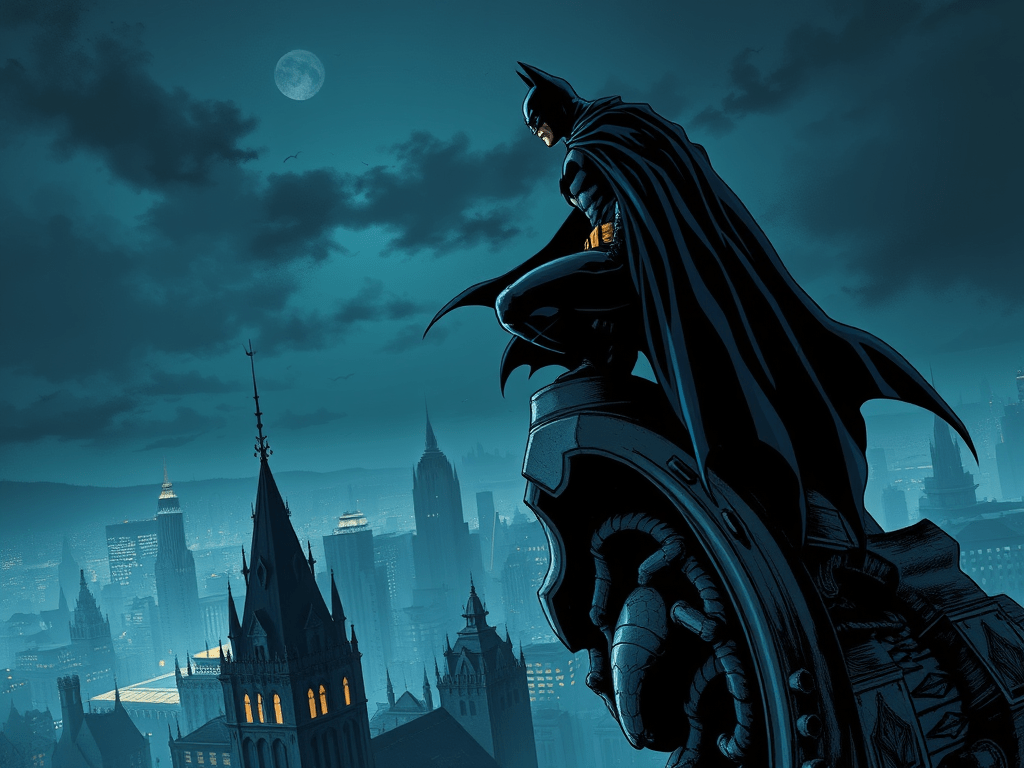
    Dressed in dark colours and perched on gargoyles (Gotham really does have too many of those), Batman is a stark contrast to what we usually imagine hope to be. He is not bright or flamboyant but instead is bruised, beaten and even seems sinister. Yet, he embodies a hope that lurks in the shadows, a constant presence even when the sun goes down.

    My love for ‘The Bat’ stemmed from watching the Justice League and Batman shows as a child. It slowly grew on to me when I started reading the comics and learnt more about the affectionately termed ‘Bat Family’. I found it fascinating to see the hero that many assume works alone, have a vast network of misfits trailing behind him. Each with a contrasting personality but still united for a single purpose.


    Bruce Wayne The Boy

    To understand Batman, we must first understand the boy behind the mask. Bruce Wayne was once just a child, devastated by the tragic loss of his parents in a dark alley (infamously dubbed as Crime Alley). This traumatic event doesn’t just define his past; it shapes his very purpose. Ironically, Bruce is his own greatest foil. He sacrifices the chance at a normal, happy life in exchange for a never-ending mission to ensure that no other child suffers the same fate he did.

    Gotham itself is a reflection of Bruce’s inner turmoil. The city is as broken, chaotic, and corrupt as the boy who lost everything. Its streets, plagued by crime, greed, and violence, mirror Bruce’s own darkness, a darkness born of grief and a longing for justice.

    Gotham is a reflection of the personal devastation that fuels Batman’s every action, a city on the brink of collapse, just like Bruce’s fractured soul. But, in fighting for Gotham, Bruce is also fighting for himself. He’s reclaiming control over a past that took everything from him, much like he’s attempting to reclaim agency in a world that seems uncontrollable.

    We see this in his symbol, The Bat-Signal, shining in the Gotham night sky, a symbol that embodies both fear and hope. For the citizens of Gotham, it represents a glimmer of hope in an otherwise dark world, a signal that someone is watching over them, fighting to restore order.

    For Gotham’s criminals, it evokes fear, signaling that their actions will not go unpunished. This duality mirrors Bruce’s own existence: the trauma of his childhood both fuels his resilience and defines the very symbol of Batman. Bruce doesn’t run from his pain; he channels it, using it as the driving force behind his quest for justice. In doing so, he reclaims not just Gotham, but his own sense of purpose and control.

    Yet his mission isn’t without its personal cost. Every step Bruce takes towards his purpose is met with a new challenge. Whether it’s the villains he faces or the children he tries to protect, Batman is constantly walking a tightrope. His “No Kill Rule” is tested time and again most poignantly during the death of Jason Todd. Death in the Family was particularly tough to read, because Jason’s death wasn’t just a loss it nearly broke Bruce, pushing him to the edge of crossing that line he swore never to cross: killing the Joker.

    This event left a deep scar on Bruce. His guilt and sense of failure made him hesitant to take on another Robin Tim Drake (who many consider the one who perfected the mantle). After Jason, Bruce became more isolated, more obsessed with his mission, and more burdened by the weight of his choices. It’s in these moments that Bruce’s true resilience shines: he never takes for granted that anyone, even those closest to him, won’t be pushed to the brink. He treads the line between hope and despair daily. In the darkest of times, he chooses to stay true to his purpose.

    (I bet if we took an Adversity Quotient (AQ) for Bruce Wayne ,it would be higher than anything we could ever imagine.)

    ”People need dramatic examples to shake them out of apathy, and I can’t do that as Bruce Wayne. As a man, I’m flesh and blood. I can be ignored. I can be destroyed. But as a symbol, as a symbol I can be incorruptible, I can be everlasting.”- Christopher Nolan


    The Hero We Deserve

    Batman is a friend in today’s age; his relatability is in showcasing how a tragedy spends its time shaping us. Many people are shaped by good and bad things that happened to them. It impacts their politics, speech, dressing, thoughts and even their interests.

    I find it poignant that his villains were also shaped by things that happened to them; Penguin, Harvey Dent, the infamous Joker each of them mirrors Bruce in some way, embodying the path of despair and hopelessness that Bruce has always fought to avoid. Batman stands as a constant reminder that one bad day doesn’t have to define your future. He doesn’t just fight to stop them; he fights to show them that redemption is still possible. He sees in them what they can’t see in themselves: the possibility of hope.

    To quote Kingdom Come page 151, panel 2 “More than anyone in the world, when you scratch everything else away from Batman, you’re left with someone who doesn’t want to see anybody die.” Batman’s journey isn’t just about defeating villains, it’s about showing us that, no matter the pain or loss we face, we have the power to choose hope.


    Till we meet again

    No matter the version, whether the detective of the comics, the dark knight of the movies, or the animated hero from the cartoons, each Batman carries the same essential truth: even when all seems lost, it is not. He stands as a symbol of resilience, a reminder that hope can survive even the darkest nights.

    Each new incarnation is a passing of the torch, a fresh reminder that the fight goes on, and so does the hope.

    Till we meet again, in shadows and stories yet to come.

  • The Weight of Years: Clouded eyes, Greying skies

    The Weight of Years: Clouded eyes, Greying skies

    It is often said that the windows are the eyes to a person’s soul. What happens when those eyes are clouded with cataract and blindness? Does the person lose their soul and dignity?

    I want to reflect on the importance of treating and respecting our elders in society. In the past, there was an over emphasis of elders and now in the present, the opposite has occurred. Their thoughts are seen as ‘outdated’, ‘traditional’, ‘archaic’; words that deem them as a fossil of our time, to be buried underneath once they are gone.

    But even fossils are displayed in museums aren’t they? There they provide us an opportunity to study them and learn more about what the past was like and how these relics lived through them.


    Growing Concern

    Older adults are interesting because while there is a global growth of the aging population projecting to hit over 1.4 billion people by 2030, they are plagued with mental, physical and emotional ailments that the vigor of youth can no longer hide.

    This makes them vulnerable the same way children are. However, while children have the veil of innocence around them and have not developed tough skin or keen eyes, our elders have gone past these stages to a point where their skin begins to thin and stretch. Masking pain becomes frustrating when their whole life is seemingly coming to a halting stop before they have even accomplished their dreams and wishes.

    Yet they are seen as burdens to be chucked away at a nursing home. They are told that they should plan for their own future since it’s no one’s duty to care for them. In fact, as life would place it, it would be their responsibility to care for not just themselves but their children and grandchildren throughout their entire life. Can you imagine their thoughts where they know that once their eyes are permanently shut, their ears would hear fights on estate, properties and money.

    In fact, it almost seems kinder for them to pass on younger when their skin is still tough and when they can earn their keep. At least they might be missed, if not for anything but for being a productive member of society.

    Instead, many are forced to endure emotional, physical and financial abuse at the hands of families and strangers. There has been a growing prevalence of elder abuse in society with the WHO, reporting an estimate of 1 in 6 people (15.7%) aged 60 and above being subjected to some form of abuse. As a community, we have forgotten the reverence of elders and their roles in our lives.


    Media and Culture

     In the media we consume, there is always a wise man or woman guiding the protagonist. For instance, in the Disney movie Brother Bear, the shaman woman is the key not just for the protagonist but for the reconciliation and growth of the deuteragonist.

    In Lord of The Rings, Gandalf is played by Ian Mckellen, who is a necessary motivation to ensure middle earth is not lost. Many myths and even religious texts follow such principles, which display the vitality elders in society.

    This prompts the thought of why we struggle to translate this to life.

    Gray hair is a crown of glory; it is gained in a righteous life.” (Proverbs 16:31)


    Hard Truths

    The truth is, many times our loved ones are flawed beings that have in some way or form hurt and shattered us. In fact, some older adults still act in selfish and immature ways. How then can someone mask behind the age they hold to have supremacy over others and shrink away from accountability for their actions.

    These are not the ones I am speaking of; in fact, I would implore anyone reading this to help them become better people so that their last days will not be filled with pain and hurt.

    Nevertheless, the world is not black and white and it’s something that I have struggled to accept. I know right from wrong (but my goodness are people complex and terrifying!).


    In The End

    The same can be said about all of us, we have been victims and perpetrators in others’ story. The difference will take place if we are willing to be better. We may be unable to control the other person or the fact that we will continue to be hurt. But at least we can try to restore what we can control and leave the rest to God.

    But one thing is true, there will be a time where we will become old and we will be the ones with archaic ideas, the ones who are senile, the ones who walk too slow and the circle of life will continue its rounds.

    Would we want to be treated in the same way?